The Geopolitical AI Moment: Why the U.S.-UAE Task Force Changes Enterprise Strategy in the Gulf
By Raqi AI Editorial Team · · 3 min read
The Geopolitical AI Moment: Why the U.S.-UAE Task Force Changes Enterprise Strategy in the Gulf
Last week, the U.S. Department of Defense announced Task Force Talon Synapse, the military's first bilateral AI task force with the United Arab Emirates. This wasn't a press release buried in defense policy coverage. It was a signal: AI infrastructure is no longer just a competitive advantage. It's strategic territory.
For enterprises across the GCC, this moment matters more than headline-grabbing funding rounds or new model releases. Here's why.
The Sovereignty Question No One Is Asking Loudly Enough
The Gulf states have been explicit about their ambitions: become a regional hub for AI development and sovereignty. Saudi Arabia's Vision 2030, the UAE's AI strategy, Qatar's tech investments, they're not just about economic diversification. They're about control.
The U.S.-UAE task force crystallizes a constraint that hasn't fully sunk in yet: major AI infrastructure decisions are now geopolitical decisions. Which data centers your AI systems run on. Which APIs you call. Which models you deploy. Which governments can access your models' outputs. These aren't IT decisions anymore.
For CIOs and heads of technology in the Gulf, this means your enterprise AI strategy can't just be about picking the best model or the cheapest API. You have to map geopolitical risk into your vendor strategy.
What This Means for Enterprise AI Adoption
1. Sovereign alternatives are becoming table stakes. Enterprises that relied entirely on U.S.-based AI vendors are now actively exploring regional alternatives, Lucidya, regional LLM providers, open-source models that can be deployed on local infrastructure. This isn't ideology. It's risk management.
2. Data residency is moving from compliance checkbox to competitive advantage. Companies that can guarantee data stays within GCC infrastructure are winning contracts in sectors where sovereignty matters: government, defense, critical infrastructure, financial services. The question shifts from "Can you deliver AI?" to "Can you deliver AI without leaving the region?"
3. Vendor consolidation is accelerating around trusted providers. You're seeing this with EY's expansion of agentic AI services across MENA, Accenture's regional investments, and local platforms raising capital to scale. Enterprises are clustering around vendors they trust geopolitically, not just technically.
The Real Cost of Delay
The window for enterprises to experiment with AI is closing. As geopolitical constraints tighten, your choices narrow. If you haven't deployed internal AI systems yet, you're now building under more constraints than enterprises that moved early. You can't just pick the best open model and deploy it. You have to think about where it runs, how data flows, and what regulatory environment governs it.
The companies winning in the Gulf right now aren't the ones with the biggest AI budgets. They're the ones who mapped AI strategy onto geopolitical reality early and built defensible infrastructure around it.
The Acceleration Play
Task Force Talon Synapse does one more thing: it locks in the UAE's position as a trusted AI partner to the West. This gives local enterprises a confidence boost. The UAE isn't just betting on AI. It's aligning with the global AI superpower to shape how AI gets built and governed regionally.
For enterprises, that means the regulatory environment around AI in the GCC is about to become clearer and more structured. That's actually good news, it reduces uncertainty. But it also means the decisions you make now about AI infrastructure are increasingly sticky. You're not just choosing a tool. You're choosing a geopolitical posture.
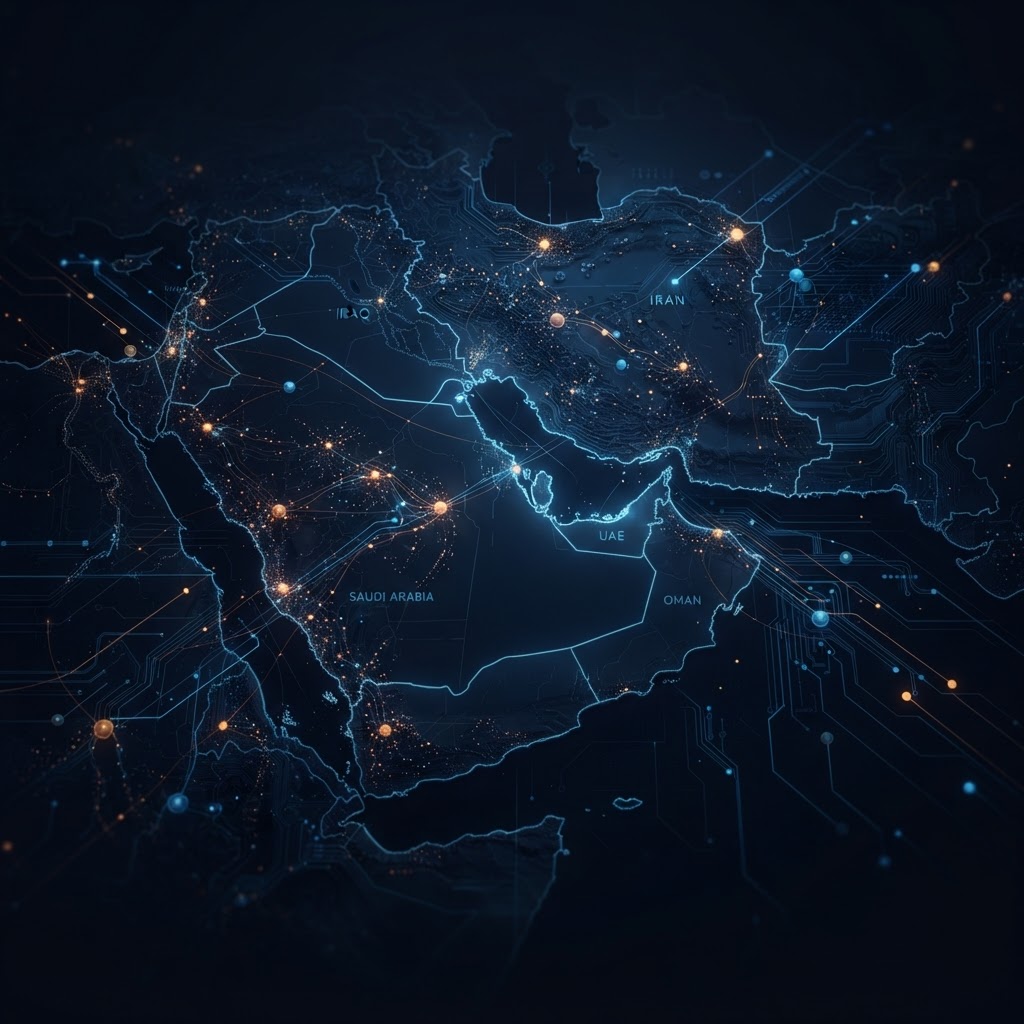
The enterprise AI moment in the Gulf isn't about the models anymore. It's about the map.
Topics: enterprise-ai, geopolitics, gcc, ai-strategy, sovereignty