Market Intelligence
GCC's AI Infrastructure Race Accelerates Amid Regional Challenges
By Raqi AI Editorial Team · · 2 min read
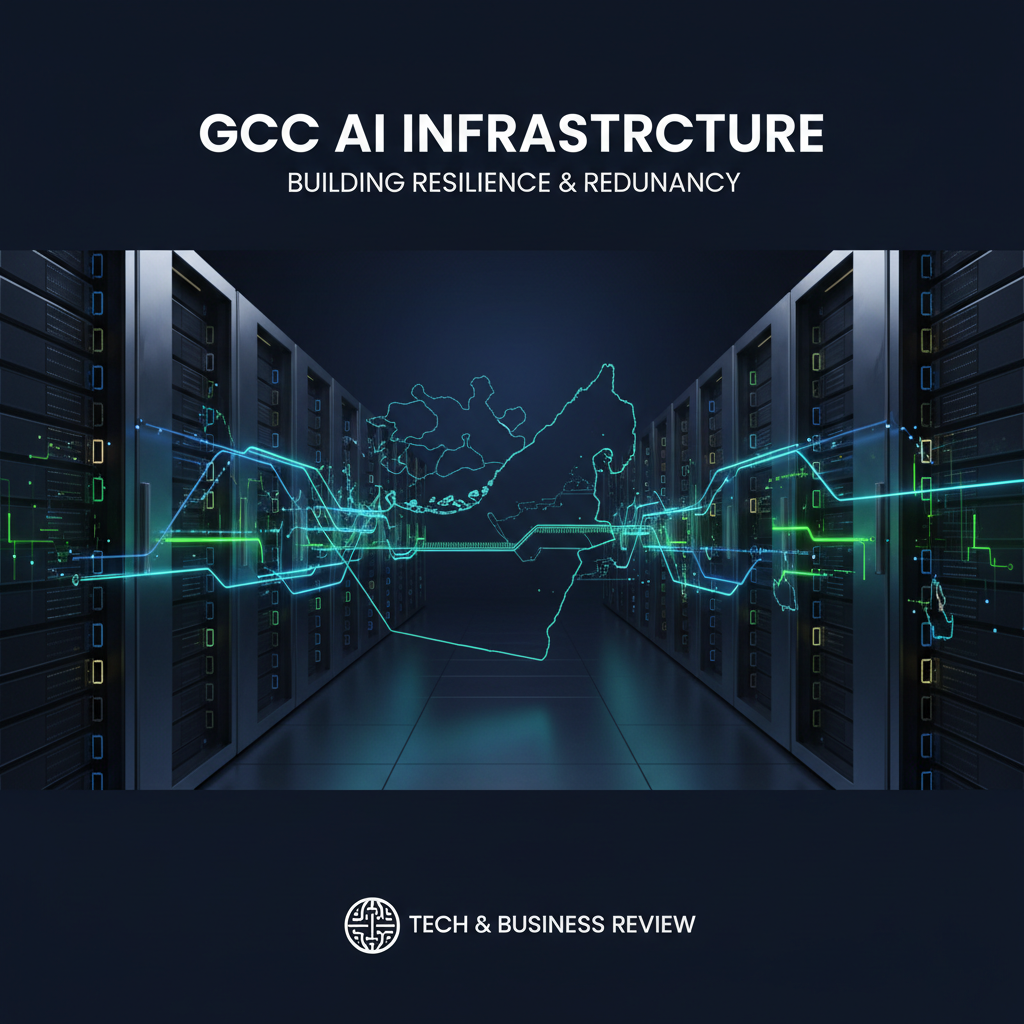
# GCC's AI Infrastructure Race Accelerates Amid Regional Challenges
The Gulf Cooperation Council (GCC) is doubling down on its ambition to become a global AI hub, with data center investments reaching USD 80 to 97 billion. Yet recent geopolitical events have exposed structural vulnerabilities that demand attention, and strategic adaptation.
## The Prize at Stake
The GCC's appeal to global hyperscalers and frontier AI labs is straightforward: cheap, abundant power, sovereign capital at scale, and regulatory agility. Microsoft, AWS, OpenAI, and xAI are all in on regional data center pipelines. The UAE alone has committed USD 46.1 billion, while Saudi Arabia's pipeline sits at USD 35.3 billion.
Compare this to the Western context: aging grid infrastructure, expensive power, and a utility sector unable to keep pace with the projected 30 GWh of new compute load required by 2030. In the Gulf, buildout times are measured in months, not years. Government regulators don't obstruct, they accelerate.
But the war has changed the equation.
## The Vulnerabilities Exposed
In February 2026, Iranian drone strikes targeted AWS data centers in the UAE and Bahrain, taking down banking, transport, and e-commerce platforms globally. Two and a half months later, the UAE facility remains offline. The attack revealed a critical flaw: geographic concentration, while efficient and profitable, is a single point of failure.
The impact rippled beyond physical infrastructure. A wartime shock at Saudi Arabia's Jubail petrochemical complex tightened global supply of high-purity resin used in printed circuit boards (PCBs). Copper foil prices climbed 30%, and total input costs in PCB segments rose as much as 40%. For a region betting everything on compute density, supply chain fragility is now a real risk.
## The Structural Case Remains Intact, For Now
Despite these headwinds, investment flows haven't dried up. Global investors still see the GCC as the optimal mix: low-cost power, high-speed buildout, and regulatory clarity that doesn't exist elsewhere. The addition of sovereign data protections, layered in by regional governments, appeals to security-conscious financial institutions and government buyers.
The question isn't whether the GCC can compete. It's whether the new risk layers, physical exposure to conflict, supply chain concentration, are manageable at scale. For enterprises relying on regional AI infrastructure, the answer depends on hardened resilience strategies: geographic diversification across UAE, Saudi Arabia, and Oman; supply chain partnerships outside the petrochemical corridor; and explicit disaster recovery protocols.
## What This Means for Enterprise Buyers
If you're evaluating GCC data centers for AI workloads, ask three questions:
1. **Redundancy**: Does the provider have failover capacity outside the immediate conflict zone?
2. **Supply chain**: Are PCB and semiconductor suppliers diversified beyond Saudi petrochemical inputs?
3. **Governance**: What explicit commitments exist around data sovereignty and geopolitical risk insurance?
The GCC's AI advantage is real. But it's no longer risk-free. Smart buyers are betting on the region, and hedging their bets simultaneously.
Topics: GCC, AI Infrastructure, Data Centers, Enterprise AI, Geopolitics, Cloud Computing