AI Strategy
The Arabic AI Agent Revolution: CNTXT AI's Strategic Move Signals GCC's Shift Toward Sovereign AI Autonomy
By Peyman Parsi · · 5 min read
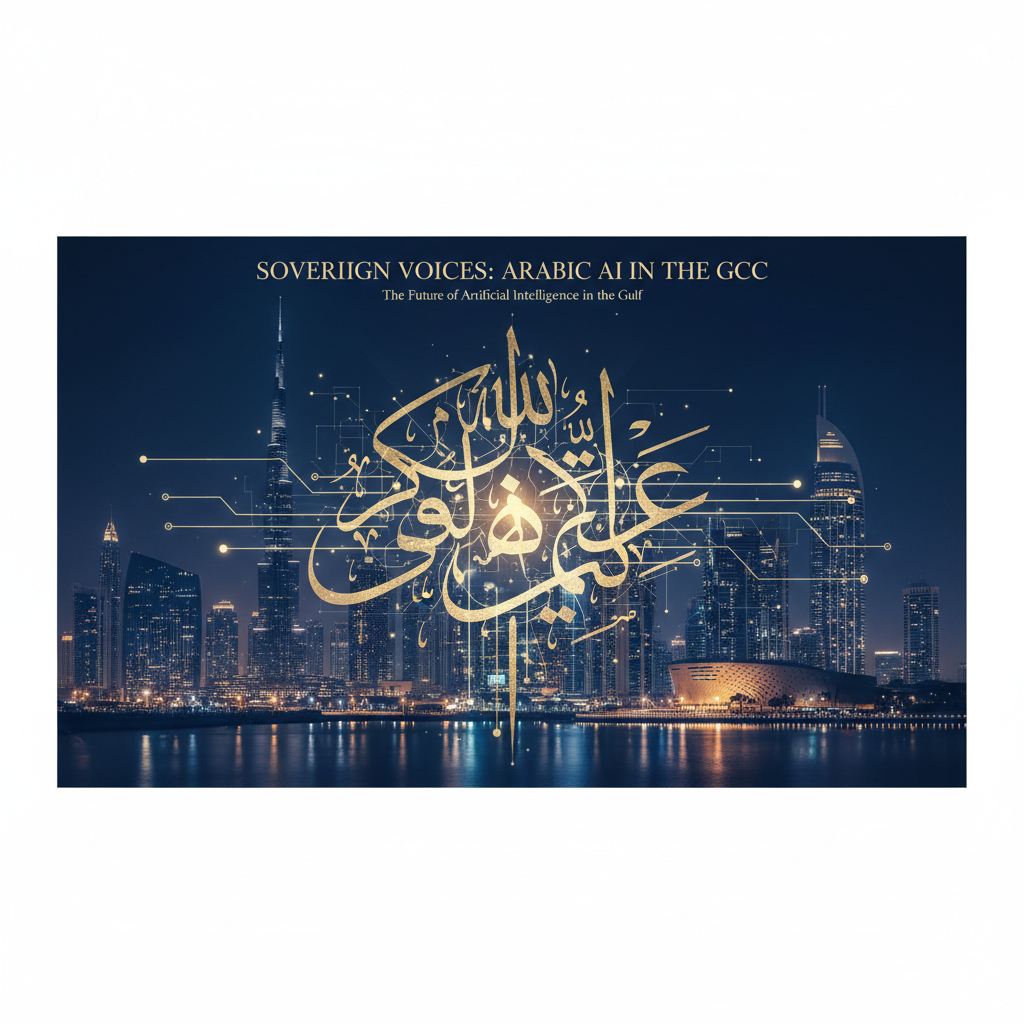
# The Arabic AI Agent Revolution: CNTXT AI's Strategic Move Signals GCC's Shift Toward Sovereign AI Autonomy
The GCC's enterprise AI ecosystem just crossed a critical threshold. On June 16, 2026, UAE-based CNTXT AI announced its acquisition of Actualize, a dialect-aware Arabic voice AI startup, marking not just a transaction but a fundamental realignment in how the region approaches AI sovereignty, localization, and real-world operational capability.
This is the story of why enterprise AI in Arabic just became serious business, and why it matters for every organization in the MENA region betting on AI transformation.
## The Market Gap CNTXT AI Just Filled
The numbers tell the story fast: the GCC conversational AI market is projected to grow from $400 million in 2025 to $2.5 billion by 2034. That is not incremental growth. That is market creation.
Yet for years, organizations across the region faced a stubborn problem: enterprise-grade AI agents that actually *worked* in Arabic were nonexistent. What existed were English-first systems hastily translated, or voice models trained on formal Modern Standard Arabic (MSA) that sounded unnatural when deployed to actual customers using regional dialects.
Banking workflows failed. Government service centers struggled. Customer service chatbots produced stilted, unusable interactions.
The reason was architectural. Building native Arabic voice AI at enterprise scale requires:
1. **Dialect-aware voice models** built specifically for Emirati, Saudi, Kuwaiti, and other regional variations
2. **Low-latency inference** capable of real-time conversation (not batch processing)
3. **Workflow automation** that lets agents *execute* tasks, not just respond to them
4. **Sovereign hosting** that keeps sensitive financial and government data in-region, under explicit control
Actualize, founded in 2023 by Muhammed Shabreen and Khalid Ghiboub, solved these problems for enterprise customers. Their platform delivered voice models described as "among the most natural-sounding in the market," backed by a team of senior engineers from Google, Nokia, and Siemens.
CNTXT AI, meanwhile, had already closed a $60 million Series A earlier this year and built the foundational sovereign AI infrastructure layer (Munsit, their Arabic voice platform). What they lacked was the agent layer, the ability to turn voice into autonomous task execution.
The acquisition was strategic inevitability.
## Why This Matters: The Shift Toward Agentic AI in MENA
The broader story here is even more significant than a single acquisition.
For the past three years, AI adoption in the GCC followed a predictable path: automation of routine tasks, enhancement of existing workflows, and compliance-first deployment. Safe. Proven. Limited upside.
But the market is shifting toward *agentic AI*: systems that don't just process inputs and generate outputs, but actually understand context, make decisions, execute transactions, and learn from outcomes. A voice agent that books a hotel reservation, updates a banking record, or processes a government application *on its own*.
This is fundamentally different. And it requires three capabilities that CNTXT AI + Actualize now own together:
**Localization at depth.** Not just translation, but native understanding of how people in this region actually speak, what they expect, and what cultural norms govern service interactions.
**Operational autonomy.** The ability to complete transactions, not just conversations. Banking deposits. Customer service escalations. Booking confirmations. Real-world actions that require accountability and explainability.
**Sovereignty by design.** Explicit control over data residency, model ownership, and deployment infrastructure. This is non-negotiable for regulated sectors across the GCC.
## The Team That Makes It Real
What often goes unmentioned in acquisition announcements is talent leverage. In this case, it is central.
Muhammed Shabreen joins CNTXT AI as CTO, bringing deep expertise in low-latency voice systems and hyperlocal AI adaptation. Khalid Ghiboub becomes VP of AI Models, owning the continued evolution of dialect-specific voice synthesis.
Their team of engineers from Google, Nokia, and Siemens brings not just technical depth but production-scale operational experience, the difference between a working prototype and a system handling thousands of concurrent requests from major financial institutions and government agencies.
That matters. Most AI startups stumble not on capability but on production reliability, latency, and scale. Actualize's team has already proven they can operate at that level.
## What This Means for Raqi AI and Enterprise AI Leaders
For organizations like Raqi AI, which specializes in private AI infrastructure and technology due diligence for highly regulated sectors, this acquisition signals clarity on a critical question: *Where does the GCC stand on building versus buying AI capability?*
The answer is nuanced. The GCC is building deep capability in foundational layers (sovereign hosting, data governance, model training). But it is acquiring specialized capability in agentic AI, the layer that turns AI into operational, autonomous systems.
For enterprises, the implication is straightforward: expect to see a rapid proliferation of Arabic-native AI agents over the next 12 months. In customer service, banking, healthcare, government services, and back-office operations.
Those agents will not speak English. They will not operate through APIs or chatbot interfaces. They will understand your business process, your local context, and your regulatory requirements, and they will work accordingly.
## The Larger Pattern: Sovereignty Meets Capability
What makes this acquisition significant is that it breaks a false binary that has constrained MENA AI adoption: the choice between building everything in-house versus relying entirely on global AI platforms.
CNTXT AI's approach: build the sovereign infrastructure layer, then selectively acquire best-in-class capability at higher layers of the stack, is becoming the dominant pattern for serious AI operators in the region.
It is cheaper than building everything. It is faster to market than waiting for in-house R&D. And it maintains sovereignty where it matters most: in data residency, model governance, and operational control.
For the GCC, that model works. The region has both the capital and the technical depth to execute on it. And this acquisition suggests that model is accelerating.
## The Moment We Are In
June 2026 marks a turning point for enterprise AI in the MENA region. The gap between "AI we have" and "AI we actually need" is closing. Fast.
Expect to see more acquisitions like this, not just startups being acquired, but capability layers being assembled into integrated, sovereign AI stacks that work in Arabic, deploy in the region, and operate with the accountability that regulated sectors demand.
CNTXT AI's acquisition of Actualize is the first clear signal that the GCC's AI future is not imported. It is being built, locally, by teams that understand the market deeply.
That is a meaningful inflection point.
---
**About Raqi AI:** Raqi AI is an enterprise AI strategy and infrastructure company headquartered in Dubai, specializing in private AI deployments, technology due diligence, and business valuation for organizations across the MENA region's most regulated sectors. Learn more at [raqi.ai](https://raqi.ai).