Enterprise AI
The AI Infrastructure Crisis: Why Enterprise Data Sovereignty Just Became Non-Negotiable
By Raqi AI Editorial Team · · 4 min read
# The AI Infrastructure Crisis: Why Enterprise Data Sovereignty Just Became Non-Negotiable
The Gulf's multi-trillion-dollar bet on becoming the world's AI computing hub just ran headlong into geopolitical reality. In May 2026, drone strikes on Amazon data centers in the UAE and Bahrain shattered the comfortable narrative that energy abundance and geographic positioning were enough to build resilient AI infrastructure. For enterprises planning their long-term AI strategy, the message is stark: centralized, even low-cost compute infrastructure is no longer a luxury. It's a liability.
## The Illusion of Stability
For the past two years, the UAE, Saudi Arabia, and Qatar were positioning themselves as the epicenter of the global AI boom. The pitch was simple and compelling: abundant hydrocarbon energy at $0.11 per kWh (versus $0.25, $0.40 in Europe), sovereign wealth funds with trillion-dollar budgets, and strategic geography made the Gulf an irresistible magnet for cloud giants and AI startups alike.
Amazon, Google, Microsoft, Cisco, and Oracle all expanded operations in the region. Saudi Arabia's HUMAIN announced plans to deploy tens of billions of dollars into AI infrastructure through Vision 2030. The UAE's MGX and G42 became symbols of digital sovereignty and compute democratization. It seemed inevitable, the Gulf would be to AI what Texas had become to semiconductors.
Then February 2026 happened.
Within weeks, Amazon's UAE and Bahrain data centers were attacked. The Strait of Hormuz effectively closed. Oil prices spiked from $72 to $120 a barrel. Global energy markets fractured. And suddenly, the fundamental assumptions underpinning the Gulf's AI strategy, stability, cheap energy, uninterrupted connectivity, were no longer guaranteed.
## The Real Cost of Centralization
As of late May 2026, the fallout is becoming clear:
**Investment timelines have extended dramatically.** Pure Data Center Group, Oaktree's subsidiary, temporarily paused all capital deployment decisions in the Middle East. Others aren't pausing, they're repricing. Insurance rates for data centers have jumped. Facility hardening and anti-drone technology are now standard costs, adding 15-25% to project budgets. What was supposed to be fast, cheap infrastructure is now slow and expensive.
**Energy costs are rising even in energy-rich states.** Gas prices in the UAE jumped 30% in April after sustained crude above $100. Industrial users, particularly power-hungry data centers, are absorbing the largest portion of these passthrough costs. The theoretical advantage of $0.11/kWh electricity evaporates when global volatility forces pricing adjustments.
**Geopolitical risk is now a material factor.** The Atlantic Council's Trisha Ray described it bluntly: "The ongoing conflict put AI infrastructure on the literal front lines in ways that even a year ago would have seemed out of the realm of possibility." Data center risk management has shifted from cyber and digital disruptions to kinetic threats. For enterprises evaluating where to host mission-critical AI workloads, this is non-trivial.
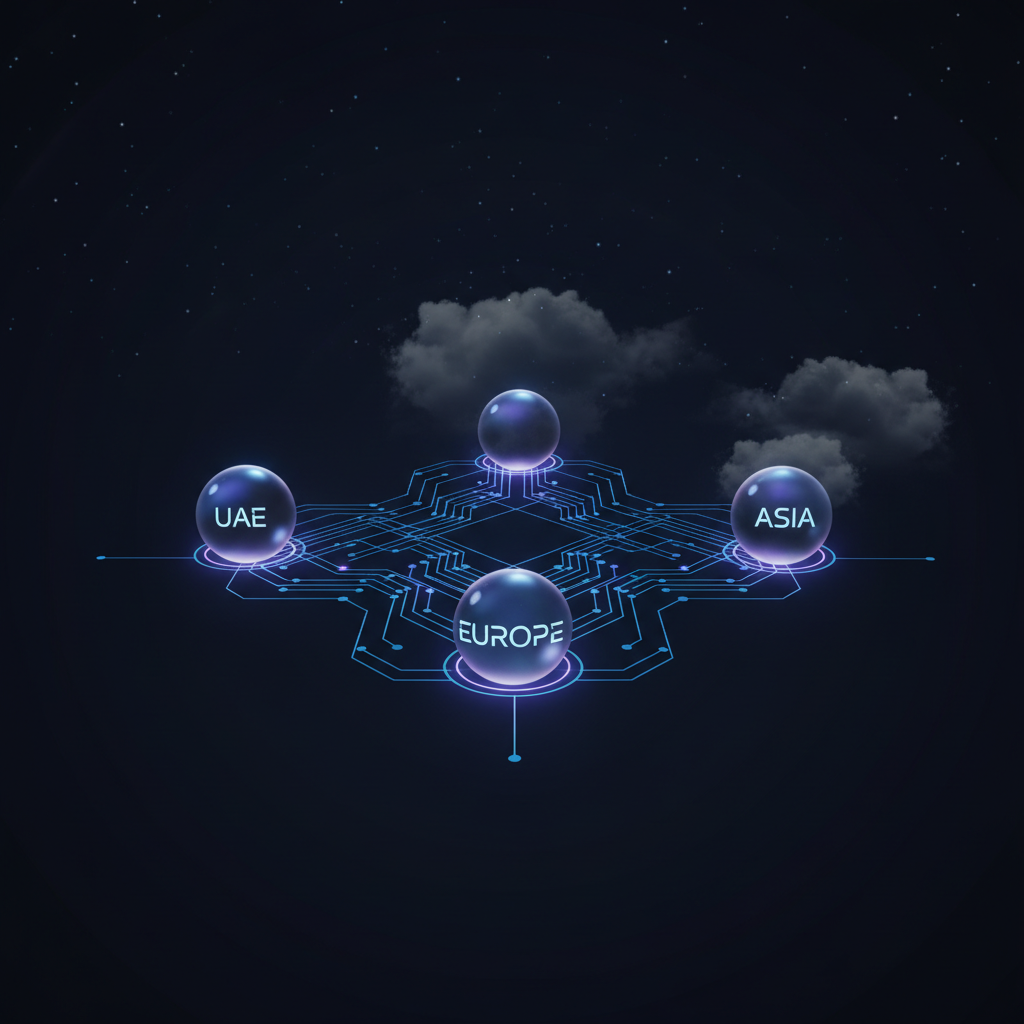
**Resilience requires geographic distribution.** The Ray's recommendation was clear: build data centers outside the country, or distribute infrastructure across multiple regions. A single region's infrastructure, no matter how cheap or well-connected, is now a single point of failure.
## What This Means for Enterprise AI Strategy
For CXOs and CIOs building enterprise AI systems in 2026, the May 2026 Gulf crisis is a wake-up call about three overlooked dependencies:
**First: Data sovereignty is more fragile than you think.** Whether your data is hosted in the UAE, Virginia, or Frankfurt, your access to that data depends on infrastructure's continued physical and geopolitical safety. Companies betting on ultra-low-cost compute in unstable regions are gambling with operational continuity.
**Second: Resilience requires redundancy.** A truly resilient AI infrastructure strategy means data and models distributed across multiple zones, multiple regions, and ideally multiple jurisdictions. This costs more upfront, but it costs far less than an outage during a regional escalation.
**Third: Private, on-premise AI is more attractive than it used to be.** If cloud regions are subject to geopolitical risk, and public clouds are subject to pricing volatility, the option of running your own AI infrastructure on-premise or in private managed environments becomes strategically valuable. It's not about cost. It's about control.
## The GCC's Moment to Lead (Differently)
Here's where it gets interesting: The Gulf doesn't need to retreat from AI ambitions. Instead, it can lead by example, by building the world's first distributed, resilient, multi-region AI infrastructure ecosystem.
Saudi Arabia's HUMAIN CEO Tareq Amin said it plainly: "The future AI economy will require nations to think beyond isolated facilities and toward integrated infrastructure ecosystems designed for reliability, scalability, and global reach." That's exactly right. And it applies not just to nations, but to every enterprise building AI systems.
The playbook:
- Distribute compute across multiple physical locations
- Design infrastructure for facility hardening and anti-drone resilience
- Implement data replication and failover protocols
- Price geopolitical risk explicitly into your investment thesis
- Partner with multiple cloud providers rather than betting on one region
## What Happens Next
By mid-2026, expect three shifts:
1. **Enterprise AI investment decisions will shift toward multi-region and on-premise deployments.** Single-region, low-cost cloud bets will fall out of favor.
2. **Data sovereignty and compliance will become competitive advantages**, not compliance checkboxes. Companies with distributed, encrypted, multi-region data will market it as a feature.
3. **Specialized, smaller AI infrastructure providers will proliferate**, capturing the segment of enterprises unwilling to rely on hyper-scaler regions.
The $385 billion question for the Gulf: Will it learn from May 2026 and evolve its strategy? Or will it double down on the same vulnerability?
For enterprises watching from the sidelines, the lesson is simpler: **Build your AI infrastructure assuming the worst about geopolitical stability. Redundancy and distribution aren't luxuries anymore. They're the new cost of doing business.**
---
*The gap between enterprise AI ambitions and resilient infrastructure isn't closing. It's widening. The question for your organization: Are you building for today's stability, or tomorrow's chaos?*
Topics: AI Infrastructure, Data Sovereignty, Enterprise AI, Geopolitics, GCC, Resilience, Cloud Computing